Bike lives outside all winter? Here's what the weather actually costs you
A single-speed cruiser, a seven-speed Dutch-style roadster or a secondhand mountain bike with the bars flipped up, ridden on the same errands
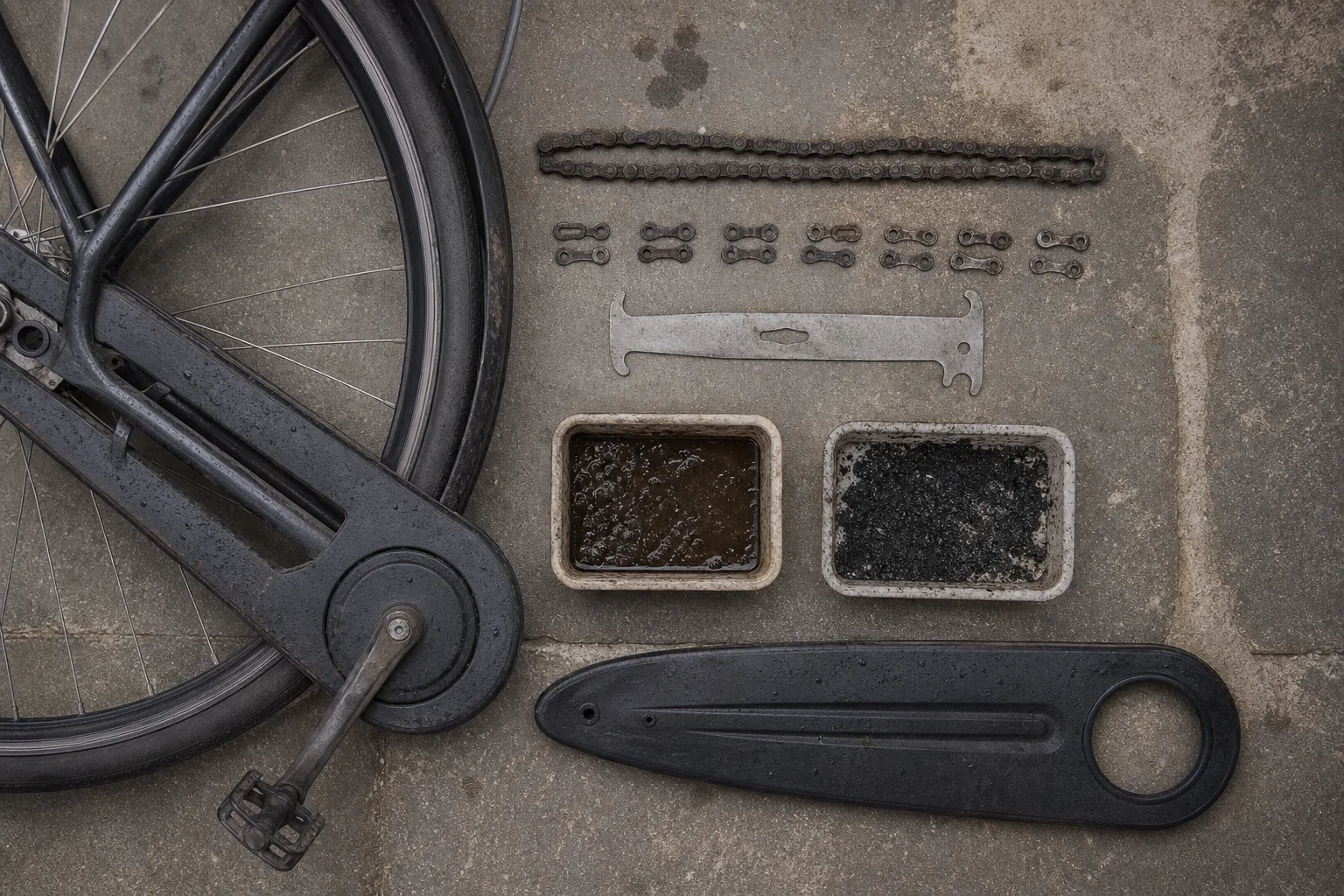
A bike stored outdoors does not fail all at once. It fails in a sequence, and the sequence is predictable enough that you can budget for it if you know which part goes first and which part takes two others with it when it goes. Rain is only half the problem; the other half is the road grit that rain carries into every gap. What follows is the order things wear, roughly what each repair costs relative to the others, and the checks worth making before you hand over money for a bike that will spend its life at a rack.
1. The chain, and the cogs it drags down with it
A chain left wet stretches faster than a chain kept indoors, and once it stretches past the point a chain checker flags, it starts reshaping the teeth it runs on. Replaced on time, a chain is the cheapest part on the bike and the labor to fit one is minor, often less than the part on a single-speed and comparable on a derailleur bike. Left too long, you are buying a chain, a cassette or freewheel, and eventually a chainring, plus the shop time for all three. Check stretch every couple of months, not by feel but with a gauge.
2. Cables and housing, the cheap parts that decide how the bike feels
Brake and shift cables corrode inside their housing where you cannot see it, and the symptom arrives as a lever that returns slowly or a shifter that will climb the cassette but not come back down. Cables themselves cost very little; the labor to run a full set, particularly internally routed housing or a hub gear cable, is where the money sits. Stainless inner wires and lined housing with sealed ferrules cost a few dollars more and last noticeably longer outdoors. A careful buyer pulls each lever, watches the return, and looks for orange bloom at the housing ends.
3. Rims and brake tracks, the wear item hiding in plain sight
If the bike has rim brakes, the rim is a wear part, and wet grit turns brake pads into a grinding paste that eats the sidewall. Rims wear from the inside face outward, and a rim that has gone concave, or has started to show a wear indicator groove, is done regardless of how true it is. Replacing a rim means a rebuild or a new wheel, which is one of the larger line items on a utility bike, so this is where paying more at purchase pays back. Machined sidewalls, or a bike with drum, roller or disc brakes, take the rim out of the wear equation entirely.
4. Bearings, and the ones you cannot reach later
Hubs, headset and bottom bracket all hold grease that water eventually reaches. The bottom bracket is the usual first casualty, because the seat tube funnels water straight to it, and a cartridge unit is inexpensive but needs specific tools and shop time. Headsets are worse: a pitted headset makes the steering notch at center, and the bearing cups may be pressed in. Sealed cartridge bearings and a decent headset are worth the upgrade at purchase, since swapping them later means labor that can approach the value of a budget bike. Spin each wheel, rock it sideways, and turn the bars slowly with the front brake held.
5. Fenders, lights and the lock the rack actually requires
Full-coverage metal fenders with a mudflap keep water off the chain, the bottom bracket and the brake track, which makes them the cheapest maintenance decision available. Stainless or aluminum hardware matters more than the fender material, because a steel stay bolt seizes and then snaps. A dynamo hub and permanently mounted lights remove the ritual of carrying battery lights indoors, and they cannot be stolen off the bike. For the lock, a hardened U-lock plus a secondary cable, both fitted to the frame so nothing rattles loose, and the Consumer Product Safety Commission is the federal body responsible for bicycle equipment standards if you want to check what a manufacturer claims.
The pattern across all five is the same: the parts that cost little to replace are the ones you should replace early and often, and the parts that cost a lot in labor are the ones to buy well the first time. A bike specified for outdoor life, with sealed bearings, full fenders, a dynamo and brakes that do not chew the rims, asks for a chain, a set of cables and an occasional pad change. That is a maintenance bill most riders can carry without thinking about it.