Twenty minutes in and the bike feels wrong. Five measurements that explain why
A single-speed cruiser, a seven-speed Dutch-style roadster or a secondhand mountain bike with the bars flipped up, ridden on the same errands
A bike that feels fine for the first block can turn unpleasant by the time you are riding home with groceries, and the reason is almost never the thing people blame. It is rarely the weight, rarely the gearing, rarely the saddle padding. It is the geometry that puts your hands, hips and feet where they end up sitting for twenty straight minutes. Five numbers decide most of it, and a careful reader can check every one of them in a parking lot with a tape measure, a tire gauge and about ten minutes of attention.
Standover tells you less than the seat tube does
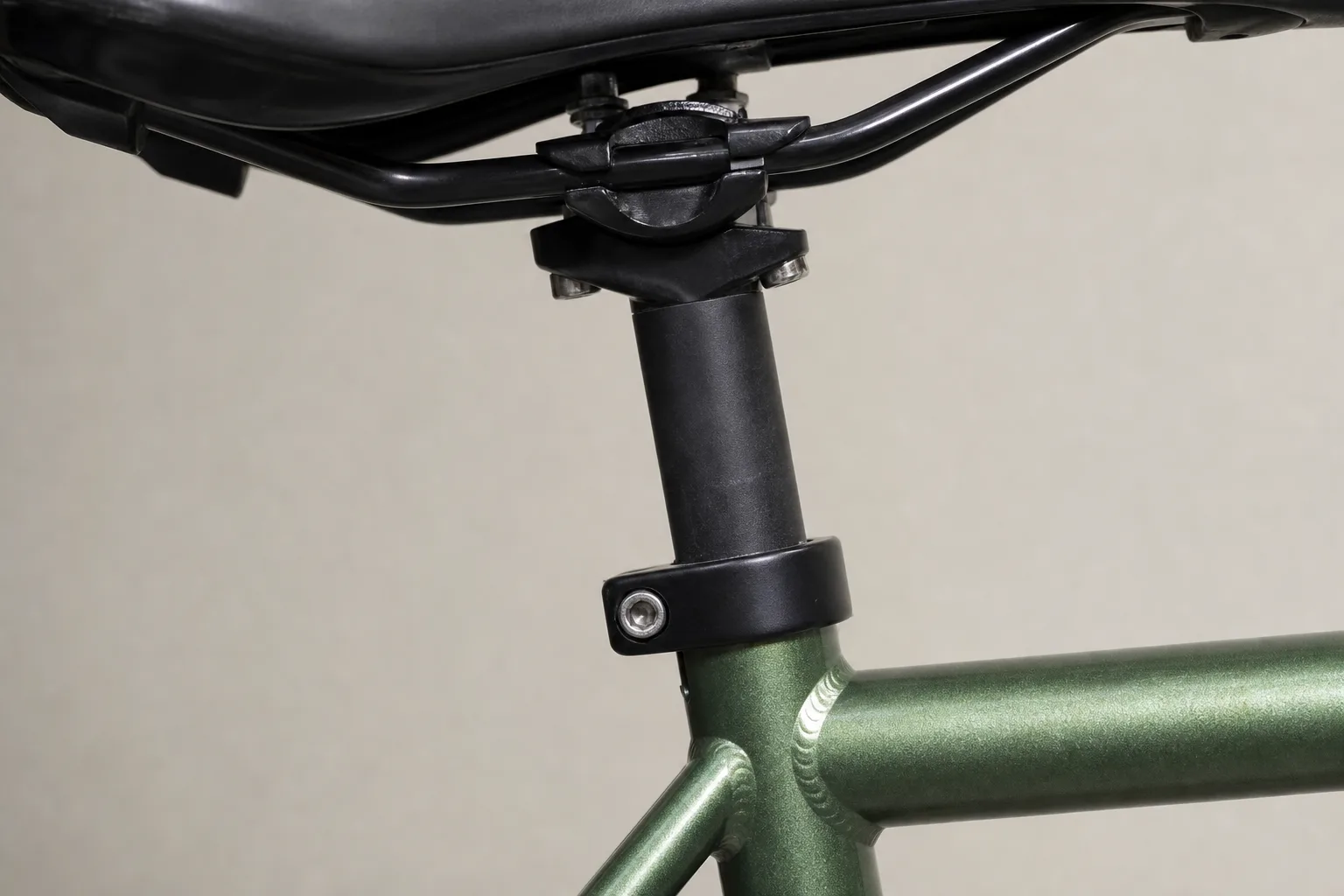
Standover height, the distance from the ground to the top tube where you straddle it, is the measurement shops still lead with because it is easy to demonstrate. Straddle the bike, look for clearance, done. It matters for stepping off in a hurry, and on a step-through frame it stops mattering almost entirely. What actually predicts fit is the seat tube length together with how far the post can come up, because that governs whether you can get your saddle to a workable height without running past the minimum insertion mark. Check the mark before you check anything else.
Saddle height itself is the one measurement most riders already know how to set, and most still set it too low, because a foot flat on the ground at a stop feels reassuring. On a short errand bike that compromise is defensible, but the knee pays for it on every pedal stroke. Aim for a slight bend at the bottom of the stroke, with the ball of the foot on the pedal, and accept that you will be on your toes at a light. If that trade bothers you, a step-through frame lets you slide forward off the saddle instead, which solves it cleanly.
Effective reach, and the number nobody prints
Manufacturers publish top tube length, head tube angle and sometimes reach, but almost none publish the distance that governs comfort on an upright bike: how far your hands sit from the nose of the saddle once the stem, bar rise and backsweep are all accounted for. Measure it yourself. Tape from the saddle nose to the middle of the grip, on a bike you know feels right, and carry that number. Then measure the candidate. A difference of an inch is noticeable within a mile; two inches will show up as wrist or neck complaints by the time you are unloading the panniers.
Saddle setback interacts with that reach in a way that trips people up. Sliding the saddle back to open your hip angle also lengthens the effective reach, so a bike that seemed slightly short becomes correct and a bike that seemed correct becomes long. The rails give you maybe two inches of travel, the stem gives you a little more, and between them most upright frames within a size of correct can be made to work. Frames two sizes off cannot, and no amount of stem swapping rescues them.
Backsweep is a comfort setting, not a style choice
Bar backsweep, the angle at which the grips swing back toward the rider, is the difference between a wrist held straight and a wrist held cocked outward for the whole ride. A flat bar with almost no sweep is fine when you are leaned forward and your forearms line up with the bar. Sit upright and that same bar rotates your wrists into a position they will complain about. Swept bars, in the range of forty-five degrees and up, put the hands where an upright torso naturally wants them, and they are among the cheapest changes you can make.
Tire pressure does the work a suspension fork would
The last measurement is the one that changes daily and costs nothing. On tires wide enough for errands, running pressure near the low end of the printed range takes the sting out of expansion joints and brick crosswalks without making the bike feel slow at errand speeds. On a secondhand bike, squeeze the tires first: rock-hard tires usually mean the seller pumped them to the sidewall maximum, and the harsh test ride you are about to take is not the bike's fault. The Consumer Product Safety Commission oversees bicycle safety requirements in the United States, and sidewall markings are part of what you are reading.
Take the tape measure to the bike you already like, write the numbers down, and every bike you look at afterward becomes a comparison instead of a guess.